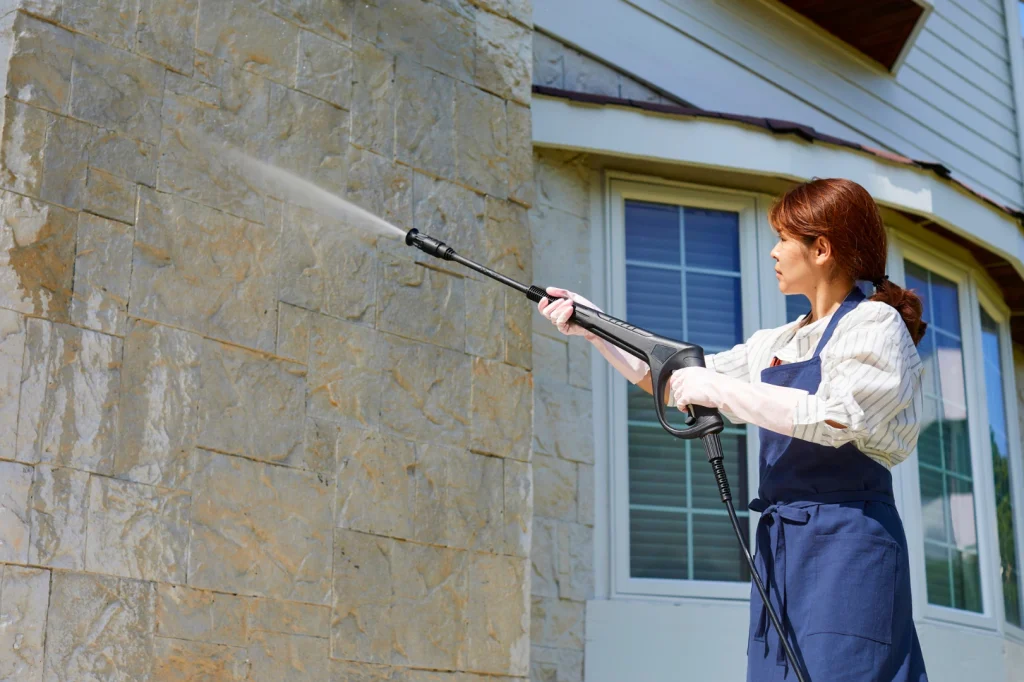
Preventing Costly Errors
Using excessive pressure ranks as the most common mistake in DIY pressure washing. Many homeowners assume higher pressure delivers better results, but this approach damages surfaces, strips paint, splinters wood, and cracks vinyl siding. Always start with lower settings and increase gradually only when necessary.
Holding the spray nozzle too close to surfaces creates similar problems. Maintaining proper distance prevents gouging, etching, and surface deterioration. Different materials require different distances. Vinyl siding tolerates closer proximity than wood or stucco, while windows and screens demand the gentlest approach.
Ignoring spray pattern direction causes water infiltration behind siding, leading to moisture problems and potential mold growth inside walls. Always angle spray downward on vertical surfaces and never spray directly upward under siding edges or into vents.
Inconsistent technique produces visible cleaning lines and streaks that detract from finished results. Maintain steady movement speed, consistent distance, and overlapping passes for uniform appearance across entire surfaces.
Neglecting to rinse cleaning solutions completely leaves residue that attracts dirt and may discolor surfaces over time. Multiple rinse passes ensure thorough removal, especially important when using stronger chemical cleaners on driveways or heavily soiled areas.
Working on ladders while operating a pressure washer creates serious safety hazards. The equipment’s recoil and powerful spray make maintaining balance difficult. Use extension wands for high areas, or consider professional assistance for second-story work and roofline cleaning.
When DIY projects become overwhelming or involve delicate surfaces requiring specialized knowledge, JCC Window Cleaning and Pressure Washing, LLC brings years of experience serving Hendersonville and the greater Asheville area. Their trained technicians understand proper techniques for different materials, use commercial-grade equipment calibrated for optimal results, and carry insurance protection for your property. From routine maintenance cleaning to challenging restoration projects, their team delivers consistently excellent outcomes while you avoid the risks and learning curve of tackling complex jobs yourself.
Mastering the Cleaning Process
Begin at the lowest point of your project and work upward when applying cleaning solutions. This prevents dirty water from running over already-cleaned areas. Switch to the black soap nozzle, apply detergent evenly, and allow it to sit for 5-10 minutes without drying. This dwell time lets the cleaning solution break down dirt and organic growth.
When rinsing, reverse your approach by starting at the top and working downward. Maintain a consistent distance of 6-12 inches from the surface, adjusting based on material sensitivity. Hold the wand at a 45-degree angle to prevent water from forcing behind siding or into crevices where it might cause moisture damage.
Use smooth, overlapping strokes in a sweeping motion rather than focusing the spray on one spot. This technique prevents streaking and surface etching. For vertical surfaces like home siding, work in sections approximately 3-4 feet wide, completing each section fully before moving to the next.
Driveways and concrete surfaces benefit from methodical patterns. Work in straight lines, overlapping each pass by several inches. Stubborn stains may require multiple passes or closer proximity, but avoid prolonged focus on single spots that could etch the concrete.
Wood decks demand extra caution. Keep the nozzle moving constantly and maintain greater distance to prevent splintering or gouging. Follow the grain of the wood when possible, and test pressure settings on railings or less visible areas before tackling main deck surfaces.
Monitor runoff and drainage throughout the project. Ensure water flows away from foundations and doesn’t pool in low areas. In mountainous regions where properties often have slopes and varying elevations, pay attention to how water moves across your landscape to prevent erosion or flooding issues.
Pre-Cleaning Preparation Steps
Proper preparation prevents damage and ensures thorough cleaning results. Start by removing outdoor furniture, planters, decorations, and any items near the surfaces you plan to clean. Cover electrical outlets, light fixtures, and air conditioning units with waterproof materials secured with painter’s tape.
Inspect the area for loose siding, cracked windows, or damaged wood that could worsen under high pressure. Repair these issues before starting your cleaning project. Check for wasp nests, bee hives, or other insect activity around eaves and corners, addressing these concerns beforehand.
Close all windows and doors completely to prevent water intrusion. In the mountain climate around Asheville and Hendersonville, spring pollen accumulation requires pre-rinsing surfaces before applying cleaning solutions. This prevents scratching during the washing process.
Wet down surrounding plants and landscaping thoroughly before starting. This dilutes any cleaning solution that might contact vegetation. Consider covering delicate plants with plastic sheeting, though avoid leaving covers on too long in warm weather.
Clear the work area of tripping hazards like hoses, extension cords, and yard equipment. Plan your cleaning path to avoid walking through wet areas or backing yourself into corners. Inform household members about your project timeline so they avoid opening doors or windows during the process.
Test your pressure washer on an inconspicuous area first. This confirms the proper pressure setting and nozzle choice for your specific surface. Start with lower pressure and wider spray patterns, increasing intensity only as needed for stubborn stains.
Gathering Your Pressure Washing Arsenal
Success in pressure washing begins with the right equipment. Beyond the pressure washer itself, you need specific nozzles, cleaning solutions, and protective gear to complete jobs safely and effectively.
Nozzle Selection: Color-coded nozzles control spray patterns and pressure intensity. Red nozzles (0 degrees) deliver concentrated streams for tough stains but can damage softer materials. Yellow nozzles (15 degrees) work well for concrete and brick. Green nozzles (25 degrees) suit general cleaning tasks on siding and fences. White nozzles (40 degrees) provide gentle cleaning for windows and vehicles. Black nozzles apply cleaning solutions without pressure.
Safety Equipment: Eye protection shields against debris and water spray. Closed-toe boots with non-slip soles prevent falls on wet surfaces. Long pants and long sleeves protect skin from high-pressure spray and cleaning chemicals. Hearing protection matters when operating gas-powered units for extended periods.
Cleaning Solutions: Different surfaces require specific detergents. Mildew removers target organic growth on siding and decks. Degreasers tackle oil stains on driveways. General-purpose cleaners handle routine dirt and grime. Always choose biodegradable, environmentally safe products that protect landscaping and waterways.
Extension wands allow you to reach second-story surfaces without ladders, improving safety and cleaning efficiency. Surface cleaners attach to your pressure washer for even cleaning on large flat areas like driveways and patios, reducing streaking and cleaning time significantly.
Understanding Pressure Washing Basics
Pressure washing uses high-powered water jets to remove dirt, grime, mold, and mildew from exterior surfaces. The process relies on water pressure measured in PSI (pounds per square inch) and water flow measured in GPM (gallons per minute). Together, these determine the cleaning power of your equipment.
Most residential projects require machines ranging from 1,300 to 3,000 PSI. Lower pressure settings work well for vinyl siding and windows, while higher settings tackle concrete driveways and stone walkways. Understanding these basics prevents surface damage and ensures effective cleaning results.
The water temperature also plays a role in cleaning effectiveness. Cold water machines handle most residential tasks, while hot water units excel at removing oil stains and stubborn grease. For homeowners in Hendersonville and surrounding areas, cold water pressure washers typically meet most exterior cleaning needs throughout the year.
Choosing between electric and gas-powered units depends on your project scope. Electric models offer quieter operation and lower maintenance, ideal for smaller jobs like deck cleaning or patio furniture. Gas-powered units provide greater mobility and higher PSI, making them suitable for larger surfaces such as driveways and home siding.